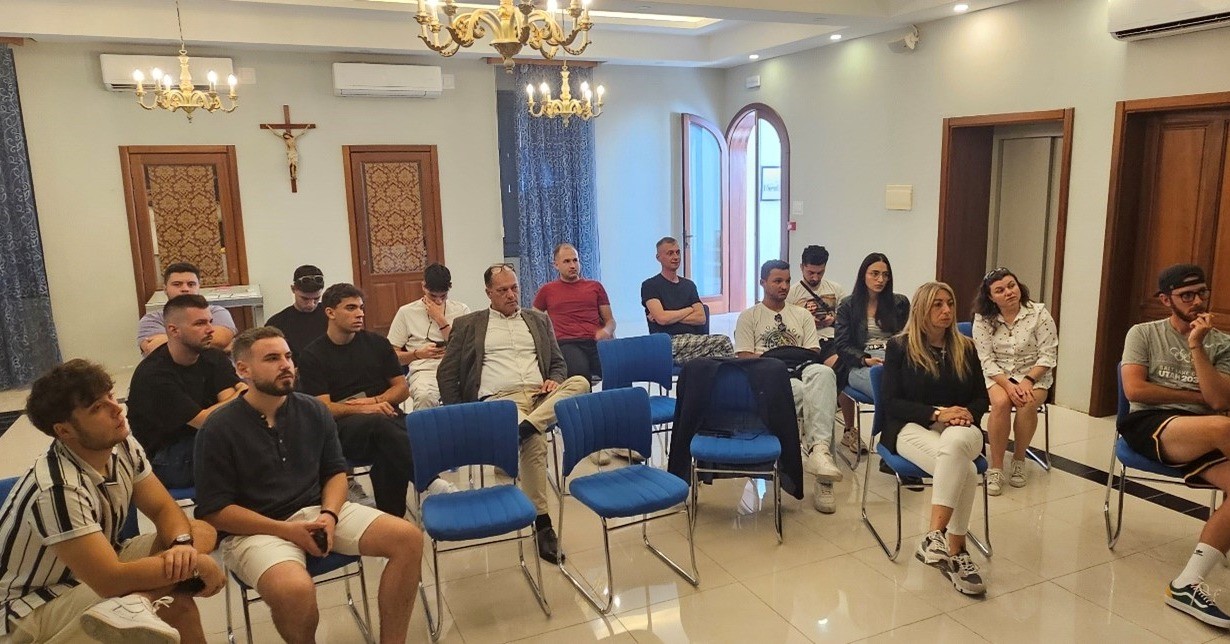
The RECup Project continued its mission to enhance participatory citizenship through intercultural dialogue and the exchange of best practices in its latest workshop, held in Gharb, Malta. Over three days, participants, including local unemployed individuals, community stakeholders, and representatives from partner organizations, engaged in discussions, hands-on workshops, and study visits to explore ways to foster active citizenship at the local, national, and European levels.
The event commenced on October 24th with a welcoming dinner at ic-Centru restaurant, providing an informal setting for participants to connect before the workshop sessions. This initial networking opportunity set the stage for productive discussions in the days to follow.
On October 25th, the workshop officially began with an opening session outlining key objectives, including developing intercultural dialogue, empowering the unemployed through active citizenship, and strengthening relationships with local authorities. The morning featured presentations from Malta, Romania, Croatia, and Slovenia, each highlighting unique national approaches to participatory citizenship. Topics ranged from Maltese policies facilitating intercultural dialogue to Romanian grassroots initiatives, Croatian tools for citizen engagement, and Slovenian policies supporting the integration of minorities. These presentations sparked meaningful conversations on overcoming barriers to civic engagement across diverse cultural and political landscapes.
The afternoon session focused on the connection between local authorities and citizens, emphasizing the role of different governance levels in fostering participatory democracy. Participants engaged in workshops and a debate forum, where they developed strategies to enhance citizen-government relationships. The day concluded with a presentation of workshop findings, followed by an evening networking dinner.
On October 26th, participants analyzed barriers to European participatory citizenship in a hands-on workshop, addressing challenges such as representation, accessibility, and inclusivity. They developed recommendations and action plans aimed at strengthening citizen engagement across Europe. The afternoon featured a visit to the local council, where participants engaged directly with local government representatives, discussing good practices for inclusive governance and learning from real-world applications of participatory policies.
The workshop concluded on October 27th with a reflection session, where participants summarized key takeaways and outlined next steps for collaboration and implementation. The importance of intercultural exchange, knowledge-sharing, and strategic partnerships was emphasized as crucial factors in ensuring a more inclusive and participatory European citizenship.
Fostering meaningful discussions and practical solutions, the RECup Project reaffirmed its commitment to empowering European citizens through participation, dialogue, and collaboration at all levels of governance.